 Design & Interface Critic
Software has long been a stage. You entered it through a window, a menu, or a sidebar, then learned repeated gestures until they became almost invisible. AI agents propose a different geography: the user no longer necessarily navigates the application but delegates an intention to a system that searches, compares, fills in, or books on their behalf.[2][3][6] This shift may seem modest but it touches something deep: the very role of the interface in the value of the digital product.
Anthropic made the Model Context Protocol an open protocol to connect language model applications to data sources and external tools, aiming for standardized integration instead of numerous custom hookups.[2][10] In this logic, the agent doesn't live confined to a screen: it feeds, acts, and returns via common gateways. This is a way of saying the future of AI lies not only in the model but in the quality of the doors we open for it.[2][5]
OpenAI advances a similar idea with its Agents SDK and Responses API, designed to orchestrate multi-step workflows and the use of tools.[3][8][11] Again, the center of gravity shifts: we no longer just celebrate text generation but the ability to decide when to call a service, structure a response, or pursue an action. For developers, this looks less like a new application than a new grammar. And grammars in technology often end up reshaping the environment around them.
Microsoft presents Copilot as an assistant that acts with or even for the user in a series of concrete tasks.[1][7] Google is developing, around Gemini, agents capable of executing tasks across multiple services.[4][9] These announcements don't tell exactly the same story but converge on a shared intuition: if the agent can traverse interfaces, then the interface stops being the sole place of experience. It becomes one surface among others, sometimes just a simple entry point.
Here the debate becomes less spectacular but more interesting. If an agent can book, search, enter, and compare, the value shifts towards what makes these actions possible: data access, API reliability, clarity of permissions, quality of execution logs, ability to rollback.[2][3][6] An application is no longer judged solely on visible beauty; it is also evaluated by what it enables behind the scenes. Polished interfaces haven't disappeared but may be losing their symbolic monopoly.
Salesforce presents Agentforce as a way to integrate AI agents into enterprise systems, with decisions anchored in CRM data and existing processes.[7][9][12] The expanded partnership with Google also plans to use Gemini models to power the Atlas reasoning engine and offer enhanced interoperability capabilities.[9][4] Here the agent is not an elegant abstraction: it must conform to an organization’s internal order, its rules, files, and validation rhythms. It is often in this discipline that promises are truly tested.
The crucial point remains to be verified over time: will agents really become a dominant layer for everyday use, or remain specialized assistants for certain professional workflows? Available sources show a clear industrial direction but do not yet prove massive adoption nor a general abandonment of graphical interfaces.[1][3][4][7] To decide, one should observe more than announcements: repeated usage, delegation metrics, decreasing navigation behaviors, and products where the API matters more than the screen.[2][3][6][9] Interfaces rarely die suddenly; they fade away layer by layer.
We must also look at the software economy with more patience. If agents handle some tasks, publishers might be tempted to value data, service robustness, and machine-to-machine compatibility over design fidelity aimed at the human eye.[2][3][7][9] That does not mean beauty becomes useless. It means beauty sometimes retreats into subtler zones: stable response times, well-explained permissions, undoable actions, frictionless transitions. In this perspective, elegance increasingly merges with trust.[2][6]
One major limit remains: agents don’t eliminate the need to understand what they’re doing. The more they sit between us and software, the more questions of supervision become important.[3][6][8] Who decides when the agent can act alone? Who audits errors? How does the user regain context? Answers are not yet stabilized, and that is precisely what deserves to be followed.[1][4][7][9] In organizations as in consumer products, the real rupture may not be total automation but a new definition of responsibility when actions pass through an intelligent intermediary. That’s where the post-interface era will be played out, sustainably.
References
References
Small numbered tags in the article body point to the sources below.
- anthropic raises 30 billion series g funding 380 billion post money valuation
- Specification - Model Context Protocol
- OpenAI API Platform Documentation
- Salesforce Expands Google Cloud Partnership to Integrate Gemini AI Models into Agentforce - Cloud Wars
- How Model Context Protocol (MCP) works: connect AI agents to tools
- openai/openai-agents-python: A lightweight, powerful ... - GitHub
- Microsoft Copilot vs Salesforce Agentforce vs Build Your Own
- Agents SDK | OpenAI API
- Salesforce.com, Inc. - Salesforce and Google Expand Strategic Partnership with Deeper Integrations Across Agentforce 360 and Gemini Enterprise
- Anthropic Publishes Model Context Protocol Specification for LLM ...
- Quickstart to OpenAI’s Responses API: Build Smarter AI Agents Fast — Cohorte Engineering Blog
- Salesforce Agentforce vs Microsoft Copilot Studio - Smartbridge
PICKUP ARTICLES
Pickup Articles
-
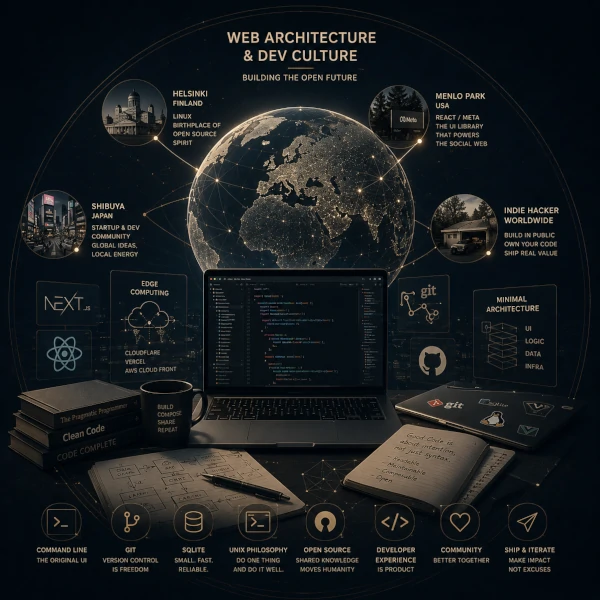 Web Architecture & Dev Culture
When the Web Fills With Machines, the Old ‘Dead Internet’ Intuition Loses Its Fictional Aura
This article connects the 'dead internet' theory with recent data on automated traffic, academic research on AI pollution of the web, and possible impacts on search, recommendation
Web Architecture & Dev Culture
When the Web Fills With Machines, the Old ‘Dead Internet’ Intuition Loses Its Fictional Aura
This article connects the 'dead internet' theory with recent data on automated traffic, academic research on AI pollution of the web, and possible impacts on search, recommendation
-
Web Architecture & Dev Culture
When AI Fills the Web, the Real Question Isn’t How Much It Produces — It’s What It Learns from Itself
This article connects the rise of AI-generated content, its growing presence on the web, and the risks it poses for search, retrieval-augmented generation (RAG), and informational