 Retro-Future Columnist
Japan's population is projected to dip below 100 million by 2048, fall to 89.93 million by 2055, and decline further to 86.74 million by 2060.[3][6] Though these figures are stark, their meaning is deeply practical: who will staff shops, provide care, maintain roads, and manage nighttime logistics? These questions will increasingly inform not only population policy but also AI and robot design.
Materials citing the Ministry of Economy, Trade and Industry estimate labor shortages—including in AI and robotics fields—will become severe by 2040.[1][7] The Small and Medium Enterprise White Paper notes that companies adopting AI to drive growth have achieved greater increases in added value compared to others.[8] AI is no longer merely a laboratory showcase but is being tested as a practical tool to fill gaps in the field.
Here, a transformation in AI’s role comes into view. In a society where population physically decreases, AI is expected not only to improve efficiency but to substitute human roles to maintain minimal societal functions.[3][4][7][8] This is a narrative closer to sustaining society than providing convenience.
In an aging society, AI care robots and monitoring support technologies are expected to fill gaps in isolated living conditions.[2][5] A 2020 European Parliament document describes Japan's aging as a structural problem combining high life expectancy with low birthrates, affecting economy, finances, labor market, and causing rural depopulation.[2] Automating care is not merely labor saving but a response to the silent void opening between urban and rural areas.
However, caution is necessary here. The data mainly indicate constraints on labor supply and willingness to adopt AI, not established field trust, cost-effectiveness, or maintenance systems.[1][4][7][8] What truly gets replaced and which tasks remain human responsibilities can only be judged by post-introduction operational data.[4][8] Misreading this risks leading to premature, unwarranted expectations.
The 2026 SME White Paper shows AI's potential to improve added value and reveals its application expanding across industries from household support to factory labor saving, defense, and disaster data collection.[8] In a shrinking society, AI becomes a tool filling daily paperwork, order management, customer service, and maintenance gaps rather than a high-level investment for large companies. Smaller workplaces experience more pronounced, subtle effects.
Yet, it is premature to consider demographic decline an automatic tailwind for AI demand. Morgan Stanley's report on South Korea shows that low birthrates not only squeeze labor supply but also sap regional vitality and future industrial foundations.[1] AI adoption speed depends not only on technology maturity but on power supply, communication, maintenance workforce, data infrastructure, and frontline education.[4][7][8] Closing social gaps is a challenge of operations more than hardware.
So what should be watched to understand this narrative's reality? Key observations include how routinely AI and robots are integrated in municipalities and SMEs and how caregiving and logistics human-machine roles are reorganized.[4][8] It is also essential to discern whether labor-shortage-driven AI adoption remains temporary support or shifts system and budgetary foundations.[1][7][8] Population projections map the long term, but real change is made by countless daily decisions to adopt or suspend AI at the frontline.
Japan's population decline is increasingly a mirror showing how AI and robots fill societal absences.[3][6][8] More important than the 2055 numbers is what becomes standard on the path there. Following these changes will provide the year's most reliable news. Amid shrinking populations, society's capacity to quietly hand over space to machines will define the next decade's work.
References
References
Small numbered tags in the article body point to the sources below.
PICKUP ARTICLES
Pickup Articles
-
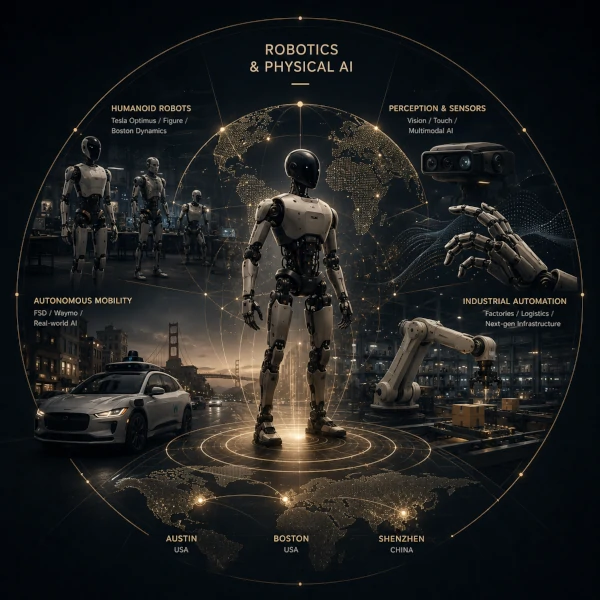 Robotics & Physical AI
Are Humanoid Robots the Fastest Route to Adapting the World to Humans?
Humanoid robot development is shifting beyond mere aesthetics to infrastructure challenges: How can robots be adapted to spaces designed for humans? By examining Tesla's Optimus, B
Robotics & Physical AI
Are Humanoid Robots the Fastest Route to Adapting the World to Humans?
Humanoid robot development is shifting beyond mere aesthetics to infrastructure challenges: How can robots be adapted to spaces designed for humans? By examining Tesla's Optimus, B
-
Robotics & Physical AI
When Humans Are Missing, Robots Step In: Why Physical AI in Factories and Logistics Should Be Read Differently Than the Old Job Stress
This analysis combines recent reports on humanoid robotics at BMW with assessments from the World Economic Forum, Deloitte, and BCG regarding the next phase of Physical AI.